
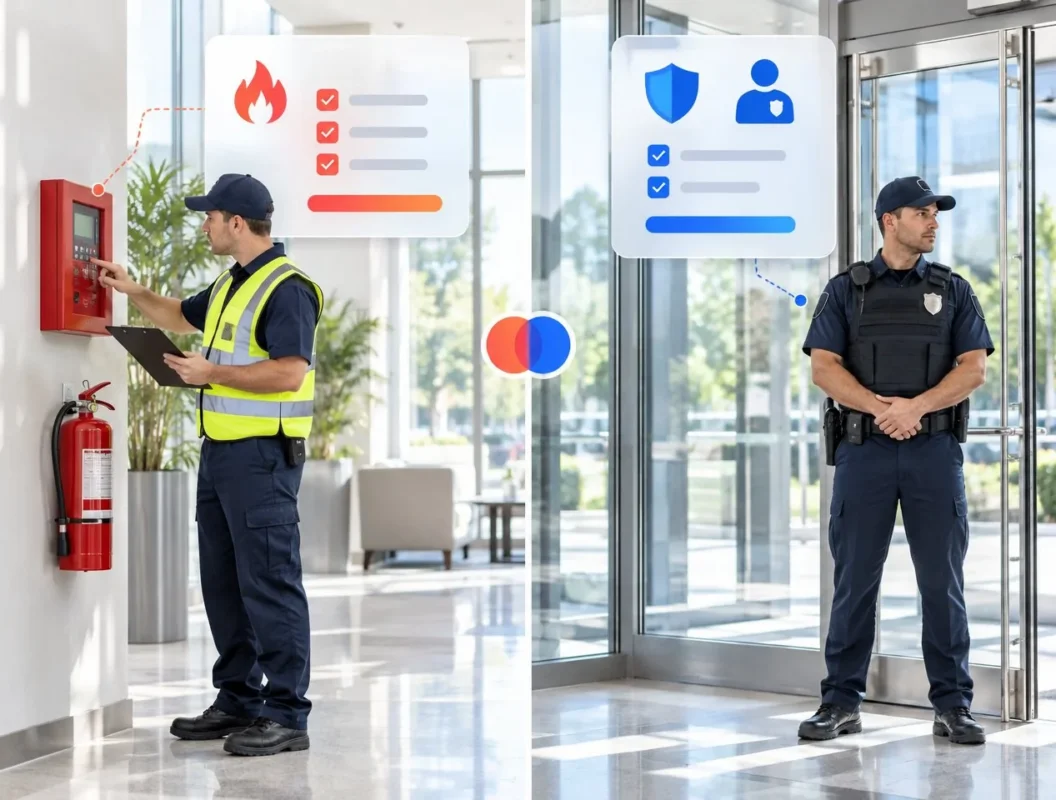
A property can have professional security guards on site and still have a serious fire-safety gap. Fire watch and security guarding look similar from the outside, since both involve a uniformed person walking the property, but they answer different risks, follow different rules, and cannot always be done by the same person. Here is how to tell which one your property needs, and when you need both.
TL;DR: Fire watch vs. security guard
- Fire watch protects against fire when a fire alarm or sprinkler system is out of service, or while hot work is happening. It is often required by the fire department.
- Security guards protect against people: theft, trespassing, vandalism and unauthorized access. They are usually a business decision, not a code requirement.
- One person rarely covers both. Fire watch personnel are expected to focus only on fire watch, so a guard busy at the front desk does not count.
- Construction and renovation sites often need both, especially during sprinkler work or welding.
What a fire watch is
California fire departments describe a fire watch as a temporary measure intended to ensure continuous and systematic surveillance of a building. In plain terms, it is a trained person whose only job is to look for fire, raise the alarm, and help people get out while the building’s normal fire protection is not working.
Under the California Fire Code (section 901.7), when a required fire protection system is out of service, the owner must notify the fire department, and the fire code official can require either an evacuation or an approved fire watch until the system is back in service. Local standards often spell out the details. Murrieta Fire & Rescue’s 2025 standard, for example, applies the rule when an impairment will last more than 4 hours and expects patrols at least every 30 minutes.
A fire watch typically means:
- Continuous patrols of the affected areas, often every 30 minutes or as the fire department directs.
- A written log of every round, with times, areas checked and anything found.
- A reliable way to call 911 and alert occupants if the alarm system is down.
- Knowing every exit and extinguisher, and keeping exit paths clear.
- No other duties. Many fire departments state plainly that fire watch personnel must not do other work while on watch.
What a security guard does
A security guard protects people and property from human threats. Their day is built around deterrence, observation and response: checking IDs, watching cameras, patrolling parking areas, locking up, and handling incidents before they grow.
- Access control at lobbies, gates and loading docks.
- Patrols to deter theft, trespassing and vandalism.
- Incident response and reports for management, police and insurers.
- Customer-facing presence for tenants, residents and visitors.
In California, anyone working as a security guard must hold a guard registration (guard card) from the Bureau of Security and Investigative Services (BSIS).
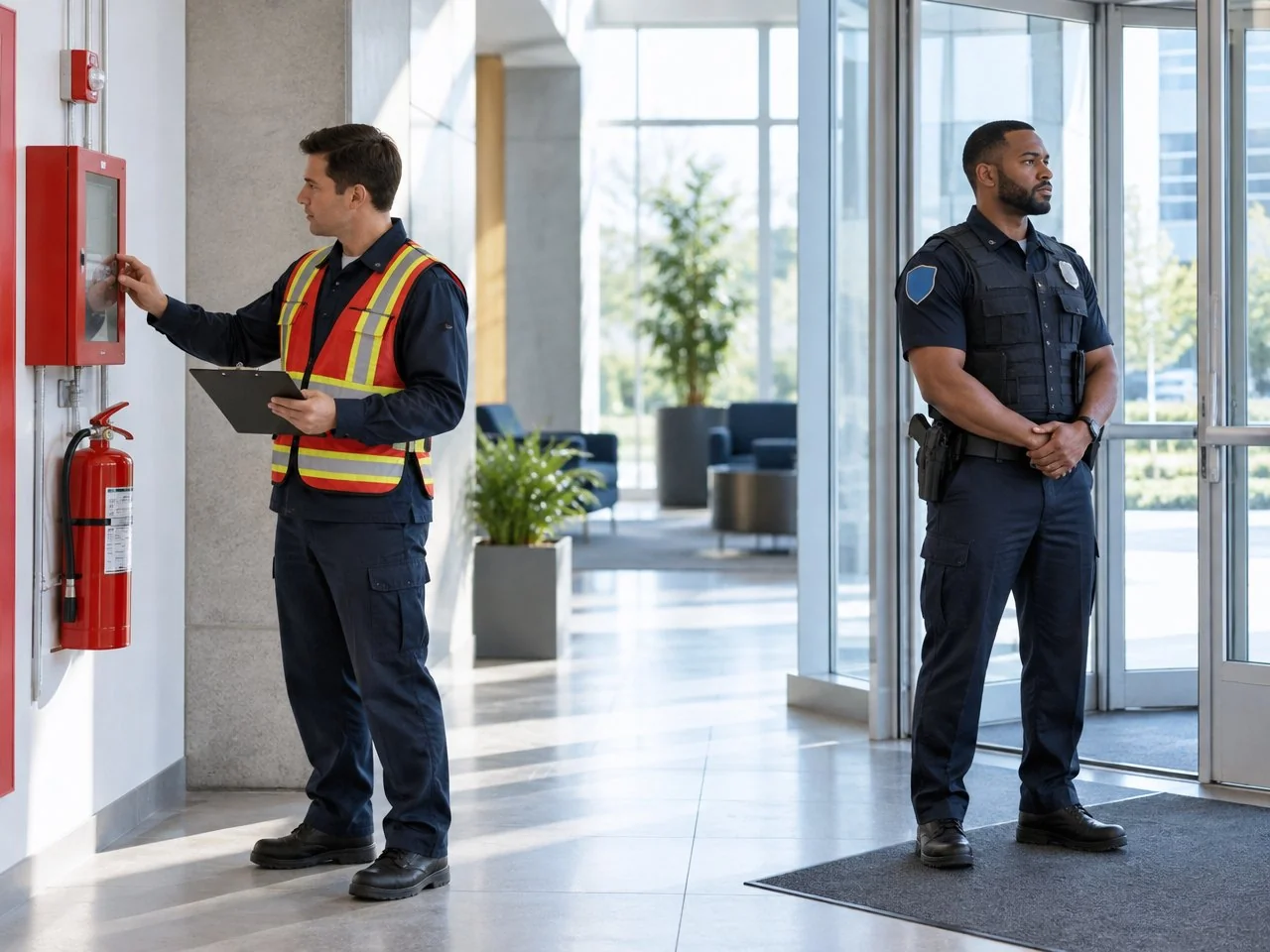
Fire watch vs. security guard, side by side
| Question | Fire watch | Security guard |
|---|---|---|
| Main risk | Fire, when normal protection is down | People: theft, trespass, vandalism, conflict |
| Why it starts | Fire department order, impaired system, hot work permit, insurer | Owner or manager decision, lease, insurer |
| How long | Until the system is restored or the hot work watch ends | Ongoing, by schedule |
| Patrol focus | Smoke, heat, ignition sources, blocked exits | Doors, people, vehicles, suspicious activity |
| Records | Fire watch log every round | Daily activity and incident reports |
| Other duties allowed? | No, fire watch only | Yes, within post orders |
1 hour
Minimum fire watch after hot work
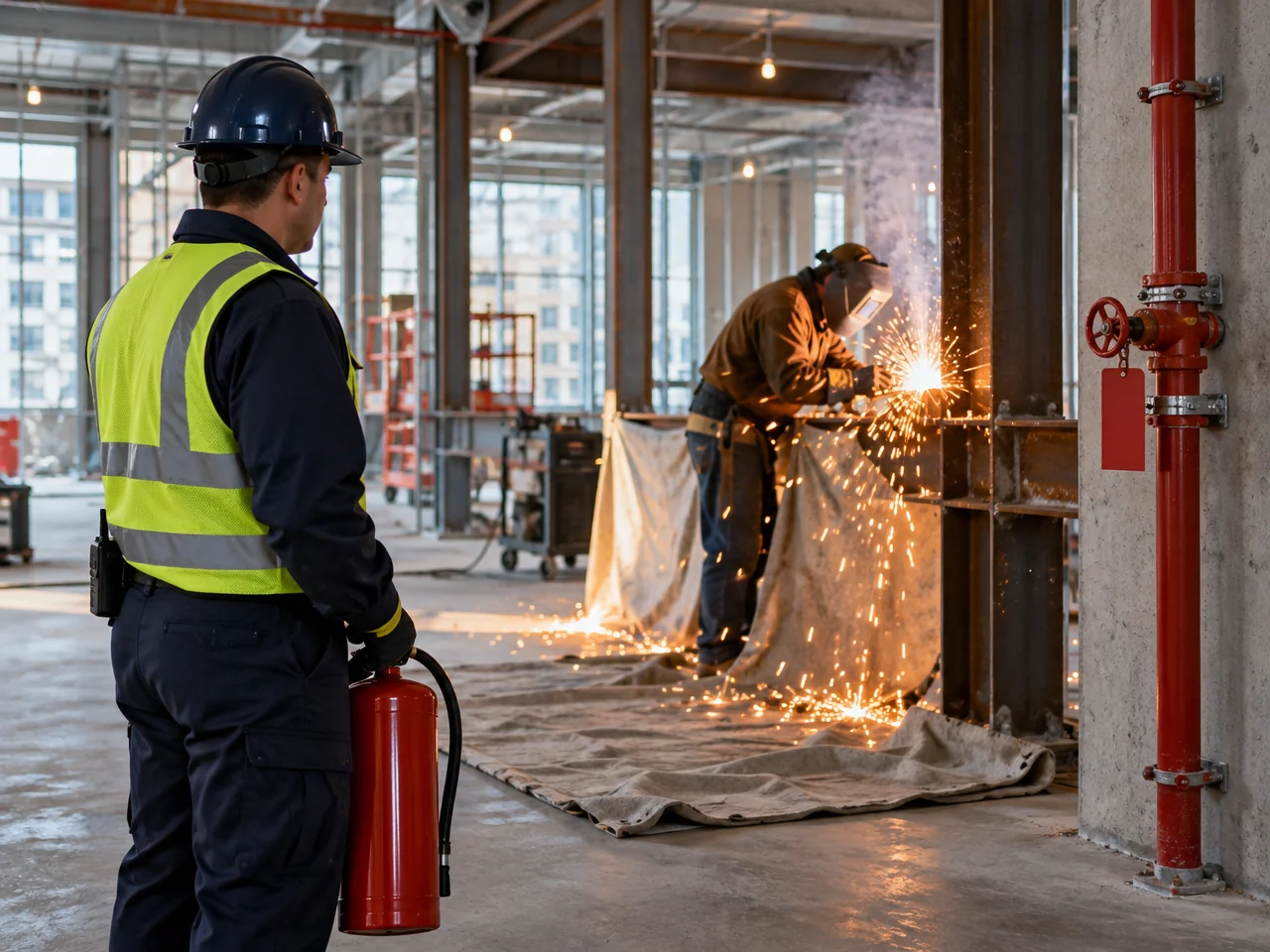
Since the 2019 edition of NFPA 51B, the fire watch must stay for at least 1 hour after welding, cutting or other hot work ends, followed by fire monitoring of up to 3 more hours when the permit requires it.
When your property needs a fire watch
- Fire alarm or sprinkler impairment: repairs, upgrades, a broken panel, a frozen or damaged riser.
- Hot work: welding, cutting, brazing, torch-applied roofing or grinding, during the work and after it.
- Construction and renovation where systems are partly installed or shut down.
- Events or crowded spaces where the fire department orders a standby watch.
- Power outages that disable alarm panels or fire pumps.
WARNING: Don’t stretch your security guard into a fire watch
Asking the lobby guard to “also keep an eye out for fire” usually does not meet a fire watch order. If an inspector finds the watch person doing other duties, or missing log entries, the property can face citations, an order to evacuate, or problems with an insurance claim.
When your property needs security guards
- Repeated theft, break-ins or vandalism, or a site that is empty at night.
- Visitor and tenant traffic that needs a front desk or controlled entry.
- Parking structures and loading docks with blind spots.
- Homeless encampments or loitering that need a calm, consistent response.
- Insurance or lease requirements for on-site security.
A 10-second way to decide
When you need both
Many properties need fire watch and security at the same time. The most common case is a building under renovation: the sprinklers are shut down in one wing, contractors are welding, and the site is empty at night with tools and copper on site.
Construction & renovation
Fire watch for impaired systems and hot work, plus guards or patrols for theft and trespass after hours.
Hotels & apartments
Fire watch during alarm or sprinkler repairs while occupied, plus guards for access and guest safety.
Warehouses & industrial
Fire watch for fire pump or suppression outages, plus security for high-value inventory and docks.
PRO TIP: Use one provider, two clear posts
Booking fire watch and security from the same company keeps scheduling, radios and reporting in one place. Just make sure the post orders list them as separate positions, with the fire watch person assigned to fire watch only.
How to set up a fire watch quickly
- Notify the fire department and your alarm company
Right away
Report the impairment, how long it will last, and which areas are affected. Tell your insurer as well. - Book dedicated fire watch personnel
Same day
Confirm they will do fire watch only, know the building, and carry a phone or radio. - Walk the route and set the schedule
First hour
Map every affected floor, exit and extinguisher, and agree on the patrol interval the fire department expects. - Keep the log until the system is restored
Every round
Record each patrol and end the watch only after the system is back in service and the fire department is informed.
“A security guard watches people. A fire watch watches for fire. When the sprinklers are off, you need someone whose only job is the second one.”
Plaza Protection Operations Team
Frequently asked questions
Can a security guard perform a fire watch?
Yes, a trained guard can be assigned as the fire watch, but only if fire watch is their sole duty during that shift. They cannot cover the front desk or a security patrol at the same time.
How often does a fire watch patrol?
It depends on the fire department’s order. Many California standards call for patrols at least every 30 minutes through the affected areas, with each round logged.
How long must a fire watch stay after welding?
Under NFPA 51B (2019 edition), at least 1 hour after hot work ends, with up to 3 more hours of fire monitoring when the hot work permit requires it.
Who decides when a fire watch can end?
The fire watch continues until the fire protection system is fully restored. The fire department that required it, or the hot work permit, sets the end point. Keep the log until then.
Need fire watch, security guards, or both? Request a quote and Plaza Protection can have licensed personnel on site quickly across the Bay Area.