
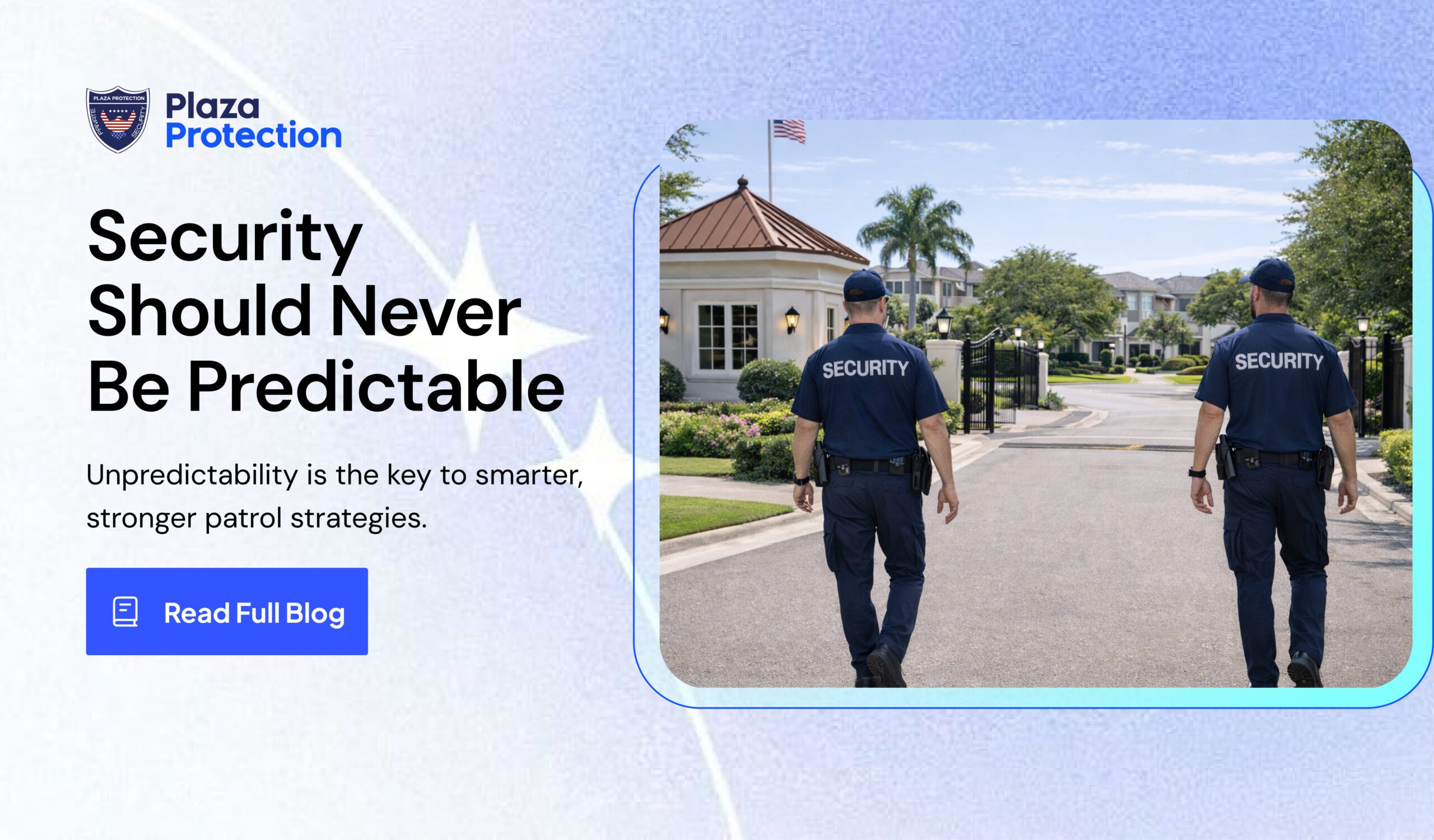
Security presence matters. But how that presence is deployed can make all the difference.
A guard who follows the exact same route at the exact same time every day may provide visibility, but a predictable routine can also create a pattern. Once that pattern becomes obvious, security gaps can become easier to anticipate and exploit.
That is why randomized security patrols are becoming an important part of proactive property security. By varying patrol routes, timing, and coverage, security teams make it harder to predict where and when an officer will appear.
The Problem with Fixed Patrol Schedules
Fixed patrol schedules are easy to organize and manage. Guards know where they need to be and when they need to be there. However, consistency can become a weakness when the routine is too predictable.
If the same areas are checked at the same times every day, gaps between patrols may become apparent. Someone looking for an opportunity may learn when a property is least likely to have a visible security presence.
The issue is not that scheduled patrols are ineffective. The problem is predictability.
A strong security strategy should provide structure for guards while avoiding routines that make coverage unnecessarily easy to anticipate.
How Randomized Patrols Strengthen Security
Randomized patrols introduce an element of uncertainty.
Instead of relying on identical routes and fixed timing, guards can vary their patrol patterns based on the property’s layout, activity levels, risk areas, and current conditions. This makes it more difficult for unauthorized individuals to anticipate security coverage.
The result is a more dynamic security presence that can help deter:
- Theft and vandalism
- Trespassing and unauthorized activity
- Loitering and suspicious behavior
- Property damage and other security incidents
Randomization does not mean guards operate without a plan. Effective randomized patrols are strategic, documented, and guided by property-specific post orders and security priorities.
Why Unpredictability Can Improve Crime Deterrence
Deterrence depends heavily on perceived risk.
When people know exactly when a security guard will arrive, they may be more willing to wait for the right opportunity. When patrol timing and routes are less predictable, that opportunity becomes harder to identify.
A visible security officer could appear in one area earlier than expected, while another part of the property receives an unexpected patrol later. That uncertainty can make unwanted activity less appealing.
For property managers and business owners, the objective is not simply to have guards present. It is to create a security environment where potential offenders cannot confidently predict when the property is being monitored.
Better Coverage and Risk Awareness
Randomized patrols can also give security teams greater flexibility.
A property does not remain the same throughout the day. Employee activity changes, deliveries arrive, customers leave, parking areas become quieter, and certain locations may become more vulnerable after business hours.
A flexible patrol strategy allows guards to pay attention to these changing conditions instead of treating every shift exactly the same.
This can be especially valuable for properties with multiple buildings, parking areas, access points, loading zones, or isolated areas that require additional attention.
Where Randomized Security Patrols Can Make a Difference
Randomized patrol strategies can be useful across many types of properties, particularly locations where large areas or multiple access points make continuous fixed-position coverage difficult.
Commercial properties, shopping centers, warehouses, construction sites, residential communities, and parking facilities can all benefit from patrol strategies designed around their individual vulnerabilities.
For larger properties, vehicle patrol services can extend the security presence across more ground, while foot patrols can provide closer observation of entrances, common areas, and higher-risk locations.
Randomized Patrols Work Best as Part of Layered Security
Randomization is only one part of an effective security strategy.
The strongest approach combines trained security personnel with the right combination of patrols, surveillance, reporting, access monitoring, and response procedures.
For example, GPS-tracked patrols can provide greater visibility into patrol activity, while digital reporting can help property managers understand what guards are seeing and where potential issues are occurring.
This combination creates more than a visible security presence. It creates a more accountable and proactive security operation.
From Routine Patrols to Proactive Protection
Modern security is not simply about checking boxes or completing a predetermined route.
It is about understanding the property, recognizing vulnerabilities, and adapting coverage as conditions change.
At Plaza Protection, security strategies can be designed around the unique needs of each property. Professional guards, vehicle patrols, foot patrols, remote surveillance, and real-time reporting can work together to create stronger visibility and more proactive protection.
The goal is straightforward: reduce predictable gaps, strengthen deterrence, and give property managers greater confidence in their security coverage.
Final Thoughts
If your security team follows the same route at the same time every day, it may be worth taking a closer look at how that routine affects your property’s vulnerabilities.
A security patrol should provide coverage without creating an obvious pattern.
Plaza Protection can assess your current security strategy and help identify opportunities to strengthen patrol coverage, deterrence, and visibility.
Rethink Your Patrol Strategy
Schedule a complimentary on-site security risk assessment with Plaza Protection to assess your security needs and discover how a more dynamic patrol approach can strengthen your protection.
Call us:- 1-844-557-5292 | Request FREE Quote

Leave A Comment