
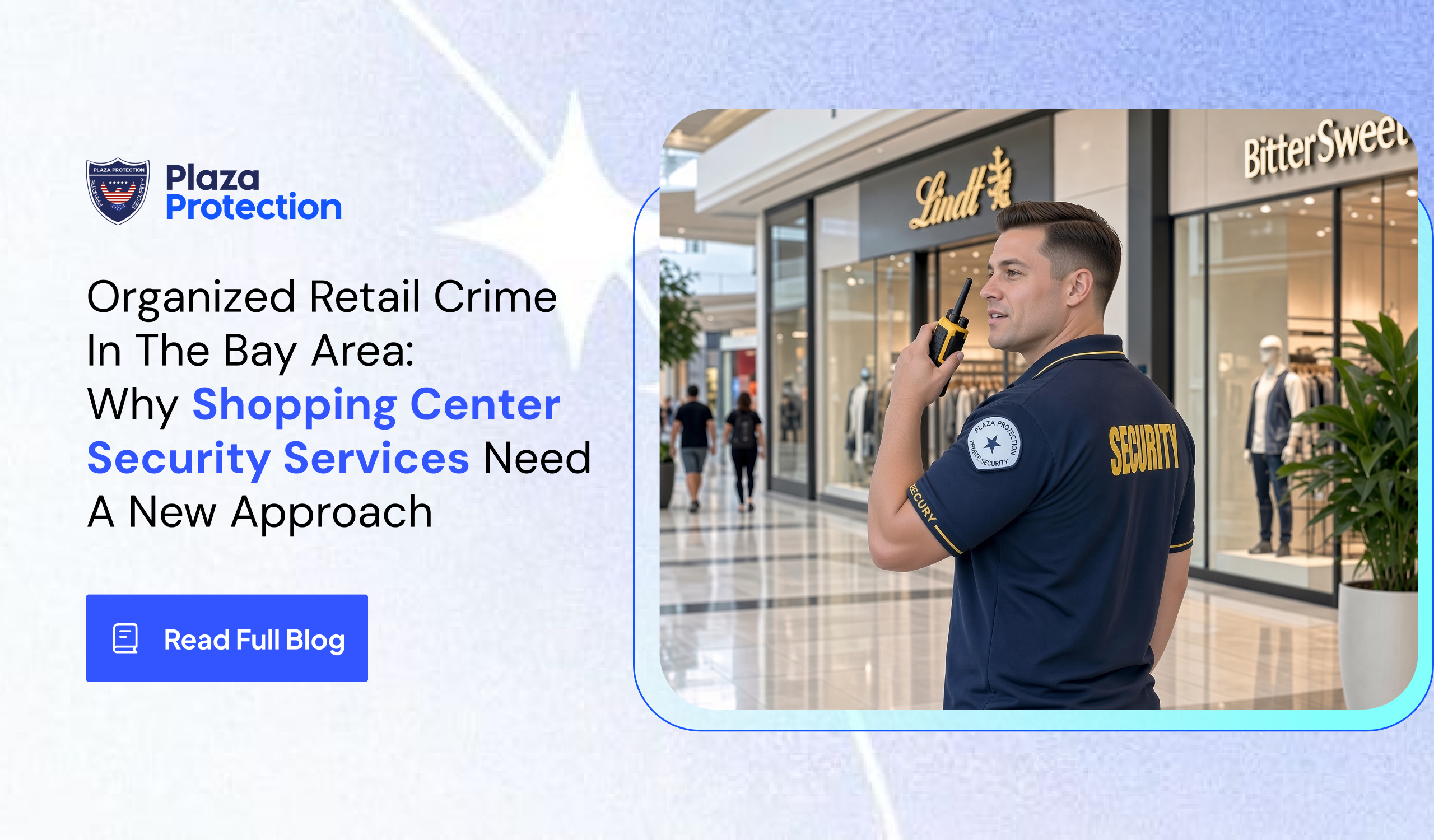
Shopping centers are more than places to shop. They are busy commercial environments where retailers, restaurants, entertainment venues, employees, families, and large crowds come together every day.
That activity creates opportunities for businesses—but it also creates security challenges.
Theft, vandalism, vehicle break-ins, unauthorized access, disputes, suspicious activity, medical emergencies, and crowd-related incidents can affect shoppers, employees, tenants, and property owners. At the same time, security teams must protect the property without making visitors feel uncomfortable or turning a shopping center into an overly restrictive environment.
That is why effective shopping center security services require more than placing a guard at an entrance.
A smarter approach combines trained security officers, strategic patrols, technology, detailed reporting, emergency preparedness, and a security plan designed around the property’s actual risks.
Why Shopping Center Security Requires a Different Approach
Shopping centers are fundamentally different from many other commercial properties.
An office building may have controlled access points. A warehouse may have limited visitors. A shopping center, however, is designed to welcome the public.
There may be:
- Multiple entrances and exits
- Large parking lots and parking structures
- Restaurants and food courts
- High-value retail stores
- Loading and service areas
- Outdoor walkways
- Entertainment venues
- Public gathering spaces
- Extended operating hours
- Seasonal events and promotions
This combination makes it difficult to rely on a single security measure.
A camera may capture an incident, but it cannot physically assist a shopper. A patrol vehicle may cover a large parking area, but it cannot provide the same visibility inside a crowded walkway. A stationary guard may provide a strong deterrent at one location while leaving another area exposed.
Effective shopping center security therefore requires layers of protection working together.
1. Start With a Shopping Center Security Risk Assessment
Before deciding how many guards a property needs, property managers should understand where and when the greatest risks exist.
A professional security assessment should examine the entire property rather than focusing only on the main building.
Key areas include:
- Parking lots and parking garages
- Entrances and exits
- Retail corridors
- Loading docks
- Service entrances
- Restrooms
- Stairwells and elevators
- Food courts
- High-value retail areas
- Vacant or low-traffic spaces
- Areas with limited lighting
- Landscaping or structures that create blind spots
The assessment should also consider when incidents are most likely to occur.
For example, a shopping center may need stronger coverage during evening hours, weekends, holidays, special events, opening and closing periods, or times when parking areas become less crowded.
This allows security resources to be deployed strategically instead of using the same schedule every day.
2. Protect the Parking Lot—Not Just the Stores
Parking areas are often one of the most overlooked components of a shopping center security plan.
Visitors may spend significant amounts of time inside the property while their vehicles remain unattended outside. Parking structures, remote sections of a lot, stairwells, and poorly illuminated areas can create additional vulnerabilities.
A comprehensive parking security strategy can include:
Vehicle Patrols
Security officers can conduct regular patrols throughout parking areas and perimeter roads, looking for suspicious behavior, unauthorized activity, property damage, and safety concerns.
Foot Patrols
Foot patrols can provide greater visibility in areas where a vehicle cannot easily access, including parking structures, pedestrian walkways, stairwells, and building entrances.
Lighting and Visibility Checks
Security personnel can identify broken lights, obstructed views, damaged signs, and other environmental conditions that may create security concerns.
Shopper Assistance
Security officers can also assist customers who need help locating vehicles, report vehicle-related incidents, or require an escort to their vehicles after dark.
The objective isn’t simply to react after a vehicle break-in occurs. It is to create a visible and unpredictable security presence that makes criminal activity more difficult.
3. Use Randomized Patrols to Increase Deterrence
Predictability can become a weakness in a security program.
If criminals can easily determine when a patrol officer will pass through a particular area, they may simply wait until the patrol has moved elsewhere.
Randomized patrols help create uncertainty.
Instead of following exactly the same route at exactly the same time, officers can vary patrol patterns while still ensuring that critical areas receive appropriate coverage.
A well-designed patrol program can combine:
- Foot patrols
- Vehicle patrols
- Interior patrols
- Exterior perimeter checks
- Parking-lot patrols
- Tenant-area checks
- Opening and closing inspections
The goal is not random activity for its own sake. Patrols should be strategic, documented, and based on the property’s risk profile.
4. Maintain a Visible Security Presence
One of the simplest benefits of professional security guards is visibility.
A uniformed security officer can provide an immediate deterrent while also giving shoppers and employees someone they can approach when they need assistance.
But visibility should not mean an intimidating environment.
The most effective shopping center security officers need to balance:
Security + Customer Service + Professionalism
Officers may help with directions, respond to customer concerns, assist during emergencies, report hazards, manage disturbances, and communicate with property management.
This creates a security presence that supports the shopping experience rather than disrupting it.
5. Protect High-Risk and High-Value Areas
Not every part of a shopping center carries the same level of risk.
Jewelry stores, electronics retailers, luxury businesses, cash-heavy operations, loading areas, and certain tenant spaces may require additional attention.
Security teams can work with property managers and individual tenants to identify:
- High-value merchandise areas
- Vulnerable entrances
- Back-of-house access points
- Delivery areas
- Stock and storage spaces
- After-hours access points
- Locations with repeated incidents
This allows security resources to be concentrated where they can provide the greatest benefit.
6. Strengthen Security Around Entrances and Exits
Entrances and exits are natural observation points.
Security officers positioned strategically near major access points can monitor activity, assist visitors, observe unusual behavior, and respond quickly when an incident occurs.
However, effective entrance security doesn’t necessarily mean restricting shoppers.
Instead, officers can focus on:
- Maintaining visibility
- Monitoring unusual activity
- Assisting visitors
- Identifying safety concerns
- Supporting tenant security procedures
- Responding to incidents
- Communicating with management and emergency responders
The right approach depends on the shopping center’s layout, operating model, tenant requirements, and risk assessment.
7. Prepare for Theft and Organized Retail Crime
Retail theft can affect individual stores as well as the wider shopping-center environment.
Security teams should work collaboratively with property management and tenant loss-prevention teams to establish clear procedures for suspicious activity and incidents.
Depending on the property’s requirements, security personnel may support:
- Retailer communication
- Suspicious-activity observation
- Common-area patrols
- Parking-area monitoring
- Incident documentation
- Emergency communication
- Law-enforcement coordination
- Perimeter checks
Security officers should also understand the limits of their authority and follow applicable laws, client procedures, and company policies when responding to suspected theft.
The objective is not simply to catch offenders. It is to reduce opportunities for crime while protecting shoppers, employees, and businesses.
8. Make Technology Part of the Security Strategy
Technology can significantly improve the effectiveness of a human security team.
Security cameras, communication systems, access-control technology, alarms, and digital reporting tools can provide valuable information—but technology works best when it complements trained personnel.
For example:
Cameras can help identify activity and provide evidence.
Security officers can investigate and respond.
Communication systems can connect officers and management.
Digital reporting can create organized records of incidents and patrol activity.
GPS-based monitoring, where appropriate, can provide greater visibility into patrol activity.
The key is integration.
A shopping center shouldn’t have technology operating in isolation from its security team. The best results come when information can move quickly from detection to verification to response.
9. Use Real-Time Communication and Reporting
Security incidents are easier to manage when everyone has accurate information.
A professional security program should establish clear communication between:
- Security officers
- Supervisors
- Property managers
- Tenant representatives
- Security management
- Emergency responders
- Law enforcement when appropriate
Detailed incident reports are equally important.
Reports can document:
- What happened
- Where it happened
- When it happened
- Who was involved
- What actions were taken
- Whether emergency services were contacted
- Property damage
- Witness information when appropriate
- Recommended follow-up
Digital reporting can make this information easier to organize, retrieve, and review.
For property managers, reporting transforms security from an invisible expense into a measurable operation.
10. Prepare for Medical and Other Emergencies
Shopping centers serve large and diverse populations, which means security personnel may encounter more than criminal incidents.
A security team may be among the first people to respond when a visitor:
- Becomes ill
- Suffers an injury
- Has a medical emergency
- Becomes separated from family members
- Experiences a vehicle problem
- Encounters a dangerous situation
Depending on their training and responsibilities, officers can provide initial assistance, secure the area, contact emergency responders, guide responders to the correct location, and help manage surrounding crowds.
Emergency planning should also address scenarios such as:
- Fires
- Severe weather
- Power outages
- Suspicious packages
- Evacuations
- Violent disturbances
- Security threats
- Major accidents
Preparedness matters because an effective response begins before the emergency occurs.
11. Plan Security for Shopping Center Events
A normal security plan may not be enough when a shopping center hosts a major event.
Grand openings, holiday activities, concerts, promotional events, celebrity appearances, community gatherings, and other attractions can dramatically change pedestrian and vehicle traffic.
Events may require:
- Additional security officers
- Queue management
- Traffic control
- Parking coordination
- Crowd monitoring
- Restricted-area protection
- Emergency access planning
- Communication with event organizers
- Coordination with tenants and first responders
Event security should be planned in advance rather than improvised after crowds arrive.
This is especially important when an event affects multiple tenants or creates unusually high pedestrian and vehicle volumes.
12. Coordinate With Tenants Instead of Working in Silos
A shopping center may contain dozens of businesses, each with different security requirements.
An anchor retailer may have its own loss-prevention team. A small independent store may depend heavily on the shopping center’s security officers. Restaurants may have different operating hours, while entertainment venues may create additional nighttime traffic.
This makes communication essential.
A strong security program establishes clear procedures for communication between shopping center security and tenant personnel.
That can include:
- Incident notification
- Emergency communication
- Shared procedures
- Patrol observations
- Security concerns
- Opening and closing information
- Special-event coordination
The objective is to create one connected security strategy rather than several disconnected security programs.
13. Balance Security With the Customer Experience
Shopping center security has a unique challenge: the property must feel safe without feeling hostile.
Visitors should be able to shop, eat, meet friends, attend events, and spend time at the property without feeling as though they are constantly being monitored.
That makes officer selection and training particularly important.
Security officers should be able to:
- Communicate professionally
- De-escalate tense situations
- Assist visitors
- Remain alert
- Follow post orders
- Make sound decisions
- Respond calmly under pressure
- Work effectively with property management
The best security presence is often the one shoppers barely notice—until they need help.
14. Measure Security Performance and Improve Over Time
Security should not be treated as a “set it and forget it” service.
Shopping centers change.
Tenants change. Crime patterns change. Operating hours change. New construction can create vulnerabilities. Events can alter traffic patterns. Technology evolves.
Property managers should periodically review:
- Incident trends
- Patrol activity
- Response procedures
- High-risk locations
- Lighting and visibility
- Tenant feedback
- Customer concerns
- Security staffing
- Event requirements
- Technology performance
These reviews can reveal opportunities to adjust patrol routes, staffing levels, officer positioning, or security procedures.
Continuous improvement helps ensure that the security program evolves with the property.
What Should You Look for in a Shopping Center Security Company?
Choosing a security provider is about more than finding the lowest hourly rate.
Property managers should evaluate whether a provider can deliver a security program that fits the property’s actual needs.
Consider asking:
Does the company customize its security plans?
Every shopping center has a different layout, tenant mix, operating schedule, and risk profile.
Are officers trained for retail environments?
Shopping center officers need more than basic security knowledge. Communication, customer service, de-escalation, emergency response, and situational awareness are all valuable.
How does the company handle reporting?
Ask whether you receive clear, timely, and actionable incident and patrol reports.
How quickly can supervisors respond?
A strong supervisory structure can make a major difference when an incident requires additional resources.
Does the company use technology effectively?
Technology should support officers and property managers rather than exist simply as a selling point.
Can the provider scale security for events or changing risks?
Your security requirements may change during holidays, special events, construction, tenant turnover, or periods of increased activity.
A Smarter Security Model for Shopping Centers
The most effective shopping center security services are not based on one guard, one camera, or one patrol route.
They are built around layers.
Assess the risks.
Deploy trained personnel strategically.
Protect parking areas and common spaces.
Use visible and randomized patrols.
Integrate technology.
Maintain real-time communication.
Document incidents accurately.
Prepare for emergencies.
Coordinate with tenants.
Review performance and adapt.
This layered approach helps property managers move from reactive security to proactive risk management.
How Plaza Protection Approaches Shopping Center Security
At Plaza Protection, we understand that shopping centers require a security strategy designed around the property—not a generic schedule.
Our approach combines professional security personnel, proactive patrols, responsive communication, detailed reporting, and customized security planning to help protect shoppers, employees, tenants, and property.
Our security teams can provide support across critical areas of a shopping center, including common areas, parking lots, entrances, exterior spaces, and other locations identified during the security planning process.
Plaza Protection also emphasizes an approachable, professional presence. Security officers are not simply there to observe—they can serve as an important point of contact for visitors, employees, tenants, and property management.
Whether your property needs ongoing security coverage, foot patrols, vehicle patrols, parking lot security, or additional support for a special event, the right solution starts with understanding your property’s specific requirements.
Schedule a Free Security Risk Assessment
Want to strengthen protection across your shopping center?
Contact Plaza Protection today to Book a free on-site risk assessment or request a free quote. Our team will help create a customized security plan built around your business’ needs.

Frequently Asked Questions (FAQs)
What do shopping center security services include?
How can security guards improve the customer experience?
Why is parking lot security important for shopping centers?
Should shopping centers use foot patrols or vehicle patrols?
How often should a shopping center security plan be reviewed?
How do I choose the right shopping center security company?

Leave A Comment