
When a fire alarm system goes offline, a sprinkler system is being repaired, or construction work creates additional fire risks, one question becomes especially important:
Who is watching the property while normal fire protection is unavailable?
That is where a fire watch security guard can make a critical difference.
Fire watch is often misunderstood as simply placing a security guard at a property and asking them to keep an eye out for smoke or flames. In reality, effective fire watch involves active patrols, careful observation, hazard identification, emergency communication, and detailed documentation.
For businesses, construction sites, commercial properties, warehouses, retail centers, and other facilities across the Bay Area, fire watch can provide an important layer of protection during situations when normal fire protection measures are temporarily unavailable or additional monitoring is required.
And when you are responsible for a property, there is a lot more at stake than simply keeping an employee on-site.
A small hazard can become a serious incident. A blocked exit can become a problem during an emergency. A hot work area that looks safe at the beginning of a shift can become dangerous later.
The purpose of fire watch is to stay alert to those risks before they have the opportunity to become something much bigger.
What Is a Fire Watch Security Guard?
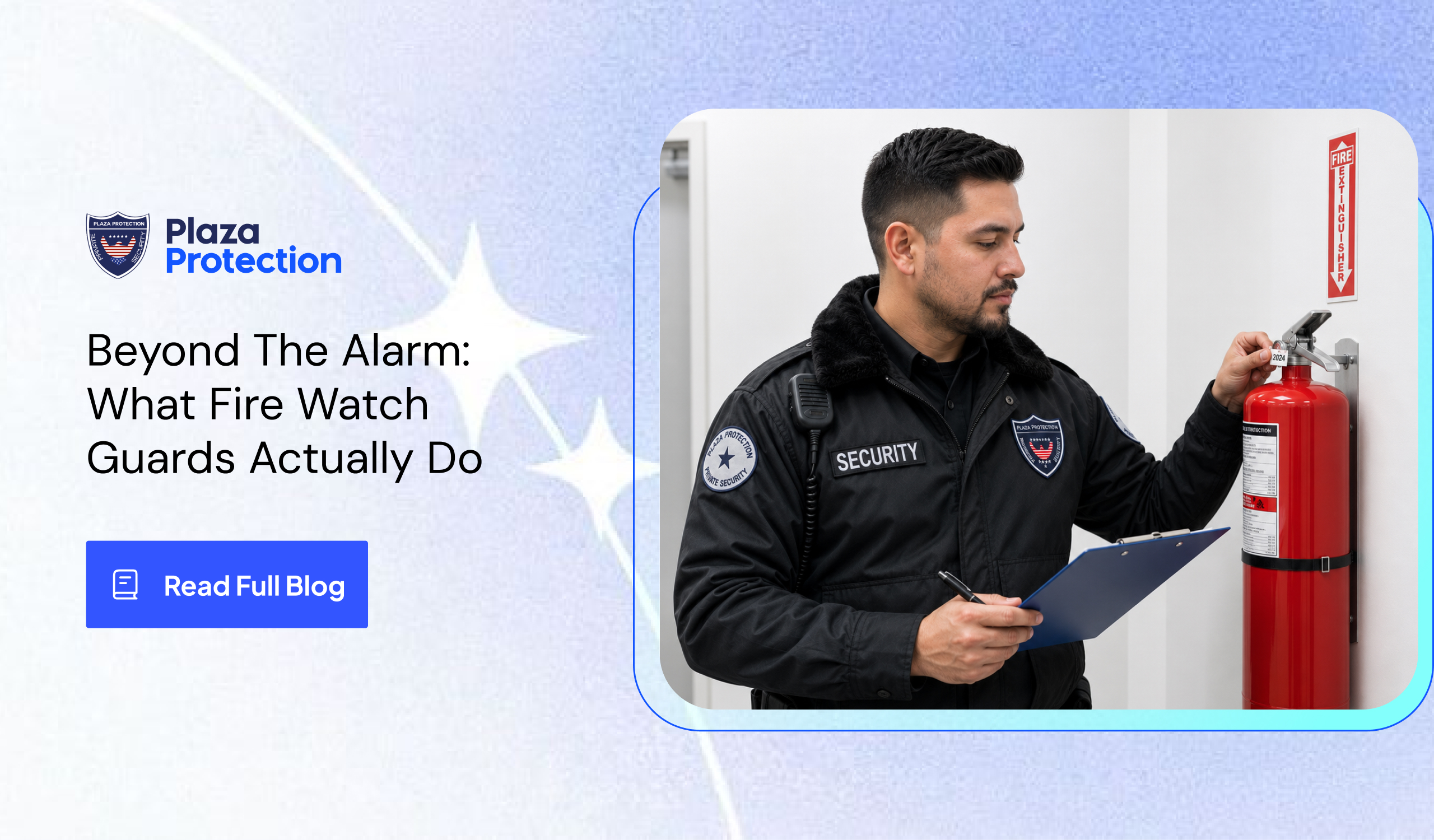
A fire watch security guard is a trained security professional assigned to actively monitor a property for fire hazards, signs of fire, and unsafe conditions.
Unlike someone who is simply stationed at a desk, a fire watch guard is expected to remain attentive and regularly inspect designated areas of the property.
Depending on the assignment and property requirements, a fire watch guard may monitor:
- Construction areas
- Commercial buildings
- Warehouses
- Retail properties
- Shopping centers
- Mechanical rooms
- Storage areas
- Parking structures
- Hot work areas
- Areas affected by fire protection system outages
- Other locations identified as higher risk
The exact responsibilities can vary depending on the property, the reason fire watch is required, the instructions provided for the assignment, and applicable requirements.
The key point is simple:
Fire watch is active monitoring, not passive presence.
A professional guard needs to know what to look for, where to patrol, what conditions should be reported, and what steps to take if an emergency occurs.
Why Would a Property Need Fire Watch?
Imagine your property’s fire alarm system is temporarily out of service.
Or perhaps your sprinkler system is undergoing repairs.
Maybe a construction project involves welding, cutting, or other work that can create sparks and heat.
The property may still need people working inside. Materials may still be stored on-site. Contractors may still be moving around. Equipment may still be operating.
The property does not simply stop being exposed to risk because a fire protection system is temporarily unavailable.
This is where fire watch may become necessary.
Fire watch can provide additional monitoring during situations such as:
- Fire alarm system interruptions
- Sprinkler system impairments
- Fire protection equipment maintenance
- Construction projects
- Hot work activities
- Certain renovation projects
- Temporary fire protection interruptions
- Other situations where additional fire monitoring is required
Requirements can vary based on the property, circumstances, local fire authority, and applicable regulations. Property owners, contractors, and facility managers should always confirm the specific requirements that apply to their situation.
For a busy Bay Area property, however, one thing remains consistent:
A temporary gap in fire protection should never be treated casually.
What Do Fire Watch Security Guards Actually Do?
This is where fire watch becomes much more than simply “having someone there.”
A professional fire watch guard is there to actively monitor the property and identify potential problems.
Here are some of the most important responsibilities.
1. Conduct Regular Patrols
One of the most important fire watch responsibilities is conducting regular patrols throughout designated areas.
A guard may walk through multiple parts of a property to check for visible signs of fire, unsafe conditions, and potential hazards.
The goal is not to take one quick look and return to a fixed position.
Conditions can change throughout the day or night.
A storage area may become cluttered. A contractor may leave combustible materials too close to a heat source. An electrical issue may develop. A door that should remain accessible may become blocked.
Regular patrols give guards an opportunity to notice those changes.
For larger properties, patrol routes can be organized so important areas receive consistent attention throughout the assignment.
2. Look for Early Signs of Fire
A fire does not always begin with a large visible flame.
A guard may notice smoke, unusual odors, excessive heat, sparks, burning materials, or other warning signs before a situation becomes more serious.
That is why observation matters.
During patrols, fire watch guards may look for:
- Smoke
- Flames
- Burning odors
- Sparks
- Unusual heat
- Electrical concerns
- Unsafe equipment
- Combustible materials near potential ignition sources
- Improperly stored materials
- Other conditions that could increase fire risk
The earlier a problem is noticed, the more opportunity there may be to respond appropriately.
Fire watch is about awareness before reaction becomes necessary.
3. Identify Potential Fire Hazards
A good fire watch guard is not only looking for an active fire.
They are also looking for conditions that could contribute to one.
Consider a construction site.
There may be lumber, packaging, insulation, fuel, tools, electrical equipment, temporary wiring, and other materials throughout the property.
Now add welding or other hot work.
Suddenly, the environment requires even more attention.
A fire watch guard can monitor areas for obvious hazards and report conditions that require correction.
For example, a guard may notice combustible materials accumulating near an active work area or an access route becoming obstructed.
The guard’s job is not necessarily to make every property decision themselves. Their role is to observe, document, communicate, and follow the procedures established for the assignment.
That communication can be extremely valuable to property managers and site supervisors.
4. Keep an Eye on High-Risk Areas
Not every part of a property presents the same level of concern.
Certain locations may require more attention because of the activities taking place there or the materials being stored there.
Depending on the assignment, fire watch may include monitoring areas such as:
- Construction zones
- Welding areas
- Cutting areas
- Mechanical rooms
- Electrical rooms
- Storage areas
- Temporary work areas
- Equipment areas
- Areas containing combustible materials
A customized fire watch plan can help determine where guards should focus their attention.
For property managers, this means the security presence can be structured around the actual conditions of the property rather than using a generic approach.
5. Monitor Hot Work Areas
Hot work can introduce additional fire risks because it may involve sparks, open flames, or high temperatures.
Examples can include certain welding, cutting, grinding, and related activities.
On a construction or renovation project, hot work may be scheduled for specific periods. The surrounding area can contain materials that require careful attention.
A fire watch guard can provide active monitoring during designated periods and follow the property’s established procedures.
This is particularly valuable when work is taking place in an environment where one overlooked spark could cause a serious problem.
The goal is not to interfere with the work.
It is to maintain awareness of the surrounding conditions and respond appropriately if something goes wrong.
6. Check That Emergency Access Is Not Blocked
During an emergency, people need to be able to move quickly.
Blocked exits, obstructed access routes, or cluttered pathways can create unnecessary complications.
During patrols, fire watch guards can watch for conditions that may interfere with emergency access and report them according to the site’s procedures.
This can be especially important on active construction sites where materials, tools, equipment, and temporary structures are constantly changing.
A pathway that was clear in the morning may not be clear by the afternoon.
Regular observation helps catch these changes.
7. Respond Quickly When Something Looks Wrong
The value of a fire watch guard becomes especially clear when an unusual condition is discovered.
If a guard sees smoke, flames, or another serious concern, they should follow the property’s established emergency procedures and notify the appropriate emergency personnel when necessary.
This is not about trying to replace firefighters or emergency responders.
It is about recognizing a potential emergency and taking the appropriate next step without unnecessary delay.
In an emergency, hesitation can cost valuable time.
A trained person already assigned to monitor the property can provide an immediate set of eyes on the situation and communicate what they are seeing.
8. Maintain Detailed Fire Watch Logs
There is another part of fire watch that does not receive enough attention:
Documentation.
Knowing that someone was on-site is one thing.
Knowing when areas were inspected, what was observed, what hazards were identified, and what incidents occurred provides a much clearer picture.
Depending on the assignment, fire watch records may include:
- Patrol times
- Areas inspected
- Conditions observed
- Fire hazards identified
- Corrective actions or notifications
- Incidents
- Emergency notifications
- Guard observations
Good documentation creates accountability.
It also gives property managers and responsible parties a record of what happened during the fire watch assignment.
For businesses managing multiple properties, consistent reporting can make it much easier to understand what happened on-site without having to rely solely on verbal updates.
Why Fire Watch Matters So Much on Bay Area Construction Sites
Construction sites are particularly interesting when it comes to fire watch.
They are constantly changing.
One day, an area may be empty.
The next day, it may contain building materials, equipment, temporary electrical systems, workers, contractors, and active construction activities.
The site may also have multiple access points and areas that are difficult for management to monitor continuously.
Construction can introduce risks through:
- Temporary electrical systems
- Combustible building materials
- Equipment
- Construction debris
- Welding
- Cutting
- Grinding
- Roofing activities
- Temporary heating equipment
- Improper storage
- Other hot work or high-risk activities
That does not mean every construction site automatically requires the same fire watch arrangement.
It means site conditions deserve careful consideration.
For a construction manager or property owner, the question should not simply be:
“Do we have someone on-site?”
A better question is:
“Do we have the right person actively monitoring the areas where a problem could start?”
Fire Watch Is Not the Same as Sitting at a Desk
This distinction is important.
A guard sitting at a desk for an entire shift may provide a security presence, but that does not automatically mean the property is receiving effective fire watch coverage.
Fire watch requires active attention.
That can involve:
Patrolling
Moving through designated areas rather than remaining in one location.
Observing
Looking carefully for signs of fire and unsafe conditions.
Identifying
Recognizing hazards that could contribute to a fire.
Communicating
Reporting important conditions to the appropriate people.
Responding
Following established emergency procedures when a serious issue is discovered.
Documenting
Maintaining accurate records of patrols, observations, hazards, and incidents.
That combination is what makes professional fire watch valuable.
What Happens If Fire Watch Is Poorly Managed?
The biggest problem with weak fire watch is that it can create a false sense of security.
A property may have a person on-site, but if patrols are inconsistent, observations are poor, communication is unclear, or documentation is incomplete, the presence may not provide the level of protection the property needs.
Common problems can include:
- Infrequent patrols
- Poor communication
- Incomplete records
- Unclear responsibilities
- Failure to identify hazards
- Lack of coverage during critical periods
- Guards who are not properly prepared for the assignment
For property owners and managers, these issues can create unnecessary exposure.
The solution is not simply hiring the cheapest available guard.
The better approach is choosing a provider that understands the property’s needs and can provide trained personnel, clear procedures, reliable communication, and consistent reporting.
How Fire Watch Can Support Your Overall Security Plan
Fire watch does not have to exist separately from your property’s broader security strategy.
In many cases, the same property may also need protection against:
- Trespassing
- Theft
- Vandalism
- Unauthorized access
- Property damage
- After-hours activity
This is especially relevant for construction sites, commercial buildings, warehouses, shopping centers, and vacant properties.
A security company may be able to combine fire watch with other security services depending on the property’s needs.
For example, a construction site may require overnight security, vehicle patrols, access control, and fire watch coverage during specific activities.
A commercial property may need fire watch during a fire system interruption while also maintaining regular security coverage.
A customized plan can help address these needs without treating every property exactly the same.
What Should You Ask Before Hiring a Fire Watch Company?
Choosing a fire watch provider is an important decision.
Before moving forward, ask practical questions.
Are your guards trained for fire watch assignments?
You want to know that the people assigned to your property understand the responsibilities involved and know how to follow established procedures.
How are patrols documented?
Ask whether the provider offers detailed records showing when patrols occurred and what guards observed.
How are incidents reported?
Find out how quickly your team is notified when an important issue is identified.
Can you provide coverage when we actually need it?
Fire protection interruptions and construction schedules do not always happen during convenient business hours.
Ask about overnight, weekend, emergency, and extended coverage.
Can coverage be customized?
Every property is different.
A large construction site may require a different approach from a retail center or commercial building.
How does your team communicate with property management?
Clear communication matters, especially when conditions change quickly.
Why Property Managers Should Not Wait Until the Last Minute
One of the most common challenges with fire watch is timing.
A property discovers that its fire protection system will be temporarily unavailable.
A contractor schedules work.
A construction project changes.
A repair takes longer than expected.
Suddenly, someone needs to arrange fire watch coverage.
Trying to solve the problem at the last minute can create unnecessary stress.
Property managers and construction teams can reduce that pressure by identifying a reliable security provider before an urgent need occurs.
Having a provider you can contact when circumstances change gives your team another option when time matters.
Why Choose Plaza Protection for Fire Watch Services?
At Plaza Protection, we understand that security is not just about having a uniformed guard on-site.
It is about having the right people, the right coverage, and the right level of accountability for your property.
Our security solutions can support construction sites, commercial properties, warehouses, retail locations, and other facilities that need professional security coverage.
Depending on your property’s requirements, Plaza Protection can provide:
- Fire watch security guards
- Unarmed security guards
- Vehicle patrol
- Foot patrol
- Incident reporting
- Access control
- Customized security coverage
Our approach focuses on visibility, communication, and accountability.
With professional security coverage and detailed reporting, property managers can have a clearer understanding of what is happening on-site.
That matters when your responsibility extends beyond simply keeping a property occupied.
It matters when you are responsible for employees, tenants, contractors, visitors, equipment, inventory, and the property itself.
The Real Value of Fire Watch Is Being Ready Before Something Happens
No property owner wants to discover the value of fire watch because a fire has already started.
The real value comes from having someone actively watching when conditions require additional attention.
A fire watch security guard may notice an unusual odor.
They may spot smoke.
They may identify combustible materials in an unsafe location.
They may notice a blocked access route.
They may observe an unsafe condition during hot work.
They may document a concern that would otherwise have gone unnoticed.
None of these moments may seem dramatic.
That is exactly the point.
Effective fire watch is about catching problems while they are still manageable.
Final Thoughts: Fire Watch Is About More Than Watching
A fire watch security guard does much more than stand around waiting for an emergency.
They patrol.
They observe.
They identify hazards.
They monitor higher-risk areas.
They communicate concerns.
They follow emergency procedures.
They document activity.
And most importantly, they provide an active layer of protection when normal fire protection measures are temporarily unavailable or when additional monitoring is required.
For Bay Area property owners, facility managers, contractors, and construction managers, choosing the right fire watch provider can make a meaningful difference in how prepared a property is during a vulnerable period.
If your fire alarm or sprinkler system is temporarily unavailable, your property is undergoing construction, or you need additional fire monitoring for a specific situation, do not leave the property without a clear plan.
Plaza Protection can help you develop a security and fire watch solution built around your property’s specific needs.
Need Reliable Fire Watch Coverage?
Contact Plaza Protection today to discuss your property’s requirements and find the right coverage for your situation.
Book a Free On-Site Risk Assessment.