
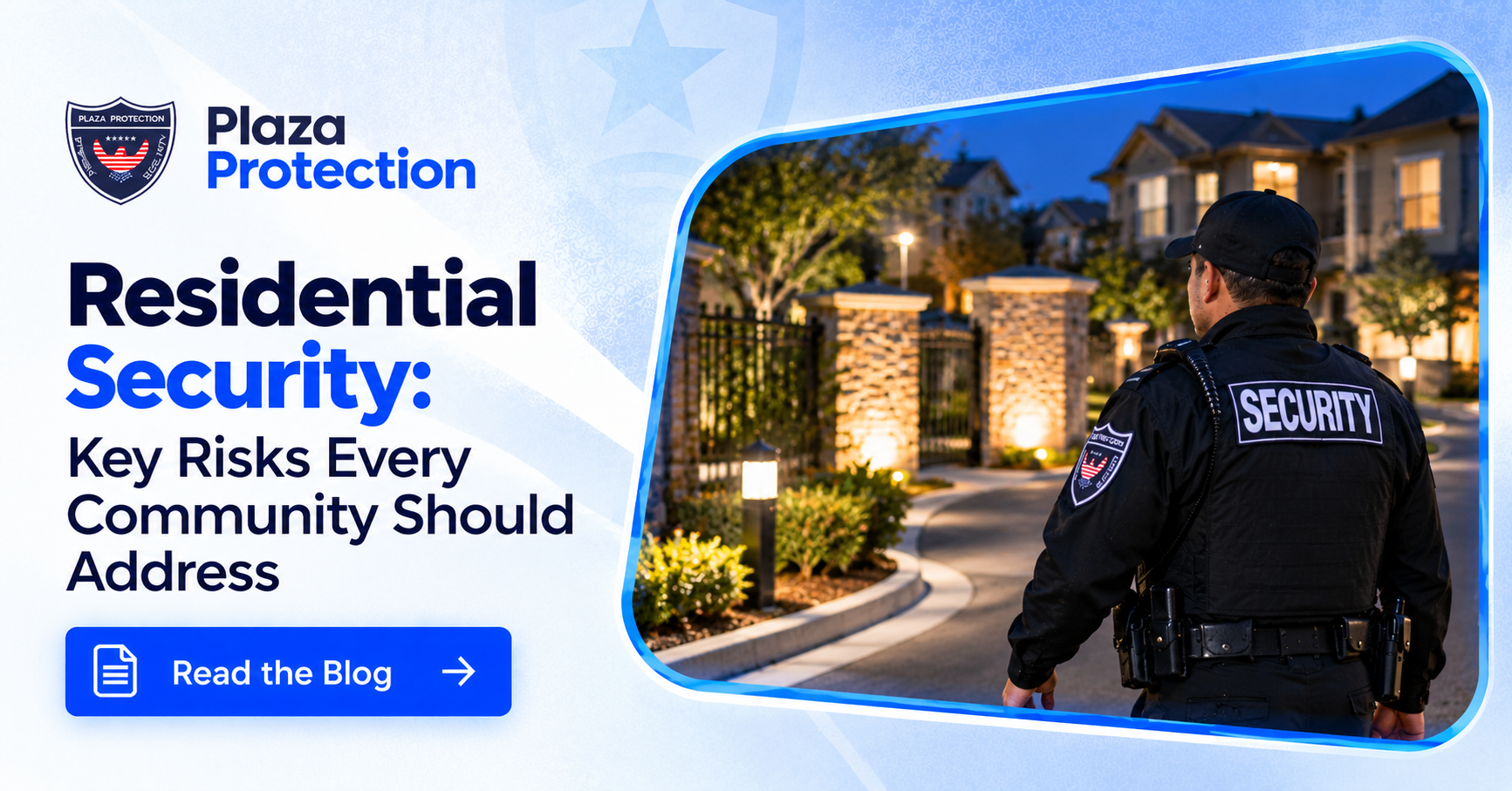
Residential security is no longer limited to watching the front entrance. For property managers, community managers and HOA leaders, protecting a residential property means managing access, parking areas, deliveries, common spaces and after-hours activity while making sure residents feel safe without making the community feel restrictive.
That balance becomes even more important in high-end and amenity-rich residential communities. Residents expect privacy, convenience and a professional experience, but they also expect management to take visible security concerns seriously.
Start With How People Actually Use the Property
One of the biggest mistakes I see in residential security planning is focusing only on the main entrance.
Walk through the property as a resident would.
Where do residents park after dark? Where do delivery drivers leave packages? Which entrance is busiest? Which garage level has limited visibility? Where could someone enter without being noticed?
Avigilon’s guidance for residential properties similarly emphasizes entrances, parking areas, exits and secluded walkways when assessing building security.
A security plan should follow the movement of people across the property, not simply the location of the lobby.
Strengthen Access Without Creating Friction
Unauthorized access can happen through more than a locked front door.
Residents may hold doors open for visitors. Vendors may arrive outside normal hours. Delivery personnel may need temporary access. Former residents may still have outdated credentials.
Property managers should regularly review who has access, which credentials remain active and how visitors are verified. Access control technology can help, but trained personnel add another layer of judgment when something does not look right.
The goal is not to make residents feel watched. It is to make legitimate access easy while making unauthorized access harder.
Treat Parking and Garages as Part of the Security Plan
Residents often notice security problems first in parking areas.
A broken vehicle window, suspicious person near a garage, poor lighting or repeated loitering can quickly change how residents perceive the entire property.
Regular foot or vehicle patrols can provide visible deterrence while allowing security personnel to check areas that cameras alone may not cover. Plaza Protection specifically provides residential patrol services for common areas, entrances, parking facilities and community spaces.
For larger communities, patrol routes should also change based on activity and identified risk rather than becoming completely predictable.
Do Not Overlook Packages and Deliveries
Package theft creates a different security challenge because the activity can look completely normal.
A person approaching a package area may be a resident, delivery driver, contractor or someone who should not be there.
Property managers should establish clear delivery procedures, secure package areas where practical and monitor unusual activity around delivery zones. Visitor and vendor management can provide another layer of accountability.
The objective is simple: know who is entering, why they are there and where they should be.
Build an After-Hours Security Strategy
A residential property does not become less active when management leaves for the day.
In many communities, evenings bring more parking activity, deliveries, visitors and resident movement. That can create security gaps if staffing and patrol coverage only reflect daytime operations.
After-hours security may include scheduled patrols, vehicle patrols, access monitoring, surveillance and rapid incident reporting. The right combination depends on the property’s layout, resident activity and previous security concerns.
Make Incident Reporting Part of the Security Plan
This is where security can become much more measurable.
If a resident reports suspicious activity, management should be able to determine what happened, when it happened and what action was taken.
A security provider should give property managers clear documentation rather than vague statements such as “the area was checked.”
Plaza Protection’s Client Portal provides visibility into patrol activity, guard locations, visitor management, schedules, site tours and incident reporting.
That creates a useful management loop:
Observe → Document → Respond → Review → Improve.
Over time, those reports can also help identify recurring problem areas instead of treating every incident as an isolated event.
Remember That Security Is Also a Resident Experience
A security officer in a residential community interacts with residents, guests, vendors and property staff.
Professional communication matters.
A guard who can calmly assist a resident, identify unusual activity, manage an access concern and document an incident becomes part of the property’s daily operation rather than simply someone standing at an entrance.
This community-focused approach is also visible in how San Jose-area providers position residential security. Griffin Protection emphasizes communication and relationships with residents, while Bastion highlights familiar personnel and community-focused protection.
For premium residential properties, that combination of vigilance and professionalism is particularly important.
Practical Residential Security Checklist
Before reviewing your current security provider, ask:
- Are all major entrances and access points monitored?
- Are garages and parking areas regularly checked?
- How are visitors and vendors verified?
- What happens when an incident occurs after hours?
- Are patrols documented and verifiable?
- Can management review incident reports quickly?
- Are recurring problem areas identified and addressed?
- Does security coverage change when the property’s risks change?
If several answers are unclear, the issue may not be a lack of security. It may be a lack of visibility into how security is actually operating.
How Plaza Protection Supports Residential Communities
Plaza Protection provides customized residential security for apartment complexes, gated communities and private neighborhoods. Services can include professional security guards, mobile patrols, visitor and vendor check-in, surveillance support, parking enforcement and emergency response.
The focus is not simply on placing a guard on-site. Plaza Protection combines visible security personnel with patrols, technology and reporting so property managers have a clearer view of what is happening across their communities.
Strengthen Your Residential Security Strategy
If your community is dealing with recurring access concerns, parking incidents, package theft, after-hours gaps or limited incident visibility, contact Plaza Protection for a property-specific security review. Our team can identify vulnerable areas and help you develop a practical residential security plan based on how your community actually operates.