
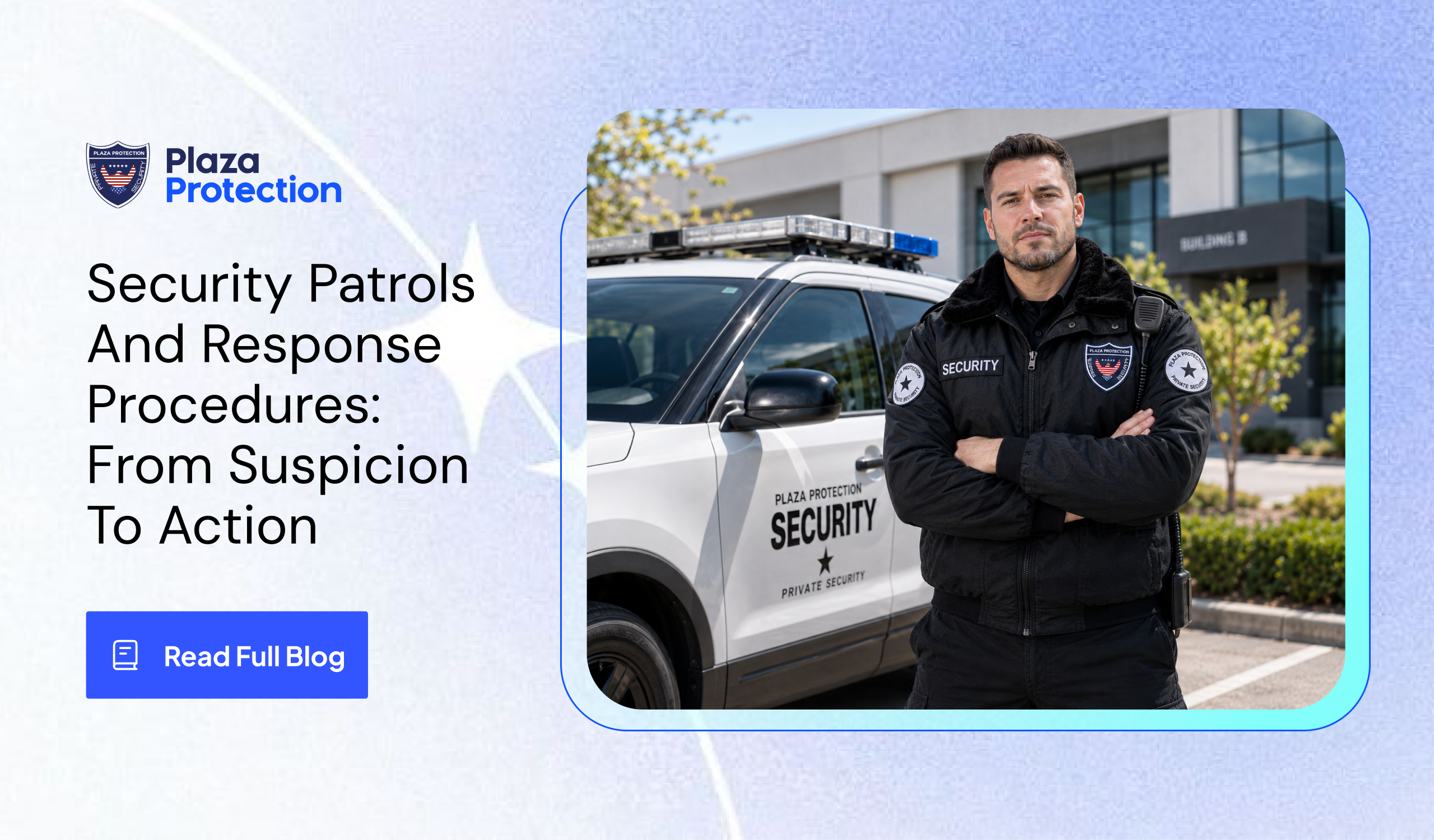
It is 11:40 PM. The building is closed. Most employees have gone home.
During a routine security patrol, a guard notices a vehicle parked near a restricted entrance. The lights are off, but someone appears to be moving inside.
What happens next?
This is where security patrols and response procedures make a real difference.
A professional security guard does not ignore unusual activity or rush into a situation without understanding what is happening. They observe, assess, follow the property’s procedures, communicate with the right people, and take appropriate action.
For business owners and property managers, security is not just about having someone on-site. It is about having someone who knows what to look for and how to respond when something does not look right.
What Do Security Guards Look for During Patrols?
Suspicious activity rarely looks obvious at first.
It may be someone checking a locked door after hours, an unfamiliar vehicle near a loading area, a person entering a restricted space, an unsecured gate, or unusual movement around a normally quiet area.
None of these situations automatically means a crime is taking place. The important part is noticing the change.
During a patrol, a trained guard can assess the surrounding conditions and compare them with the property’s normal activity. Is the area supposed to be occupied? Is the door normally locked? Does the vehicle belong there? Is someone authorized to be there?
Noticing these details early can help property teams address concerns before they become larger problems.
Security Patrols Are About More Than Visibility
A visible security guard can help deter unwanted activity, but the value of a patrol goes beyond simply being seen.
A well-planned patrol allows guards to check entrances, parking areas, common spaces, perimeter areas, loading zones, and other locations where problems may develop.
Patrols can also identify non-criminal security concerns. A damaged gate, propped-open door, poor lighting, or blocked access point can create vulnerabilities. Finding these issues during a patrol gives property teams an opportunity to address them before they create bigger problems.
What Happens When a Guard Spots Suspicious Activity?
The first step is observation.
The guard needs to understand what is happening before deciding how to respond. This may involve monitoring from a safe position, checking the surrounding area, reviewing site instructions, or communicating with a supervisor.
Next comes assessment. The guard considers the location, activity, potential risks, and whether the situation conflicts with established security procedures.
Depending on the circumstances, the guard may continue monitoring, communicate with the individual, notify a supervisor or property manager, secure an affected area, or request emergency assistance when necessary.
The goal is to respond appropriately while helping protect people, property, and normal operations.
Why Property-Specific Response Procedures Matter
Every property is different.
An office building may have controlled entrances, employee access points, parking areas, and multiple tenants. A warehouse may have loading docks, delivery vehicles, storage areas, and restricted zones. A shopping center may have public parking, customer traffic, retail entrances, and after-hours activity.
Security procedures should reflect these differences.
Guards should know which areas require attention, who should be notified when an issue occurs, how access concerns should be handled, and when additional assistance is needed.
Clear procedures help reduce confusion and create a more consistent response across different shifts and situations.
What Happens After the Situation Is Handled?
A security response should not end when suspicious activity disappears.
Documentation is an important part of the process. Guards should record relevant details such as what happened, where and when it occurred, what was observed, and what action was taken.
Good reporting gives property managers a clearer picture of security activity and can reveal patterns over time.
Repeated activity near one entrance may point to an access issue. Multiple reports from a parking area may indicate a need for additional patrol attention. Recurring after-hours activity around a loading zone may show that the area requires closer monitoring.
One report tells you what happened. A pattern of reports can tell you where to look next.
Turning Security Reports Into Better Property Protection
This is where security patrols can become proactive rather than purely reactive.
Property managers need more than a guard who responds when something happens. They need visibility into what is happening across the property over time.
Consistent patrol reports can help identify recurring concerns, vulnerable areas, changes in activity, and locations that may require additional attention.
When patrol activity and incident information are properly documented, property owners and managers can make better-informed decisions about whether their current security coverage still fits their property’s needs.
Why Trained Security Guards Still Matter
Technology plays an important role in modern property security.
Cameras can provide visual coverage. Alarms can signal certain events. Access systems can help control entry into restricted areas.
But technology does not replace human observation.
A trained security guard can notice conditions that may not trigger an alarm, assess what is happening in context, communicate with the right people, and follow established response procedures.
When security personnel and technology work together, property owners can gain greater visibility and control over their security operations.
What Should a Strong Security Patrol Program Include?
A strong patrol program should be built around the property rather than a one-size-fits-all routine.
The plan should consider the property’s layout, operating hours, traffic patterns, vulnerable areas, access points, and known security concerns. It should also establish what guards should look for, how activity should be documented, who should be notified, and how different situations should be handled.
For property managers, visibility matters too. Patrol records, incident reports, verified activity, and timely updates provide a clearer understanding of what is happening during each shift.
How Plaza Protection Supports Property Security
Plaza Protection provides customized security solutions designed around the needs of each property.
Our services include unarmed security guards, vehicle patrols, foot patrols, remote video surveillance, and fire watch services. Patrol activity can be supported by GPS verification, incident reporting, photos, notes, and real-time updates.
Through the Plaza Protection Client Portal, property managers can gain greater visibility into guard activity, patrol reports, incidents, schedules, and updates.
The goal is to provide a security program that is visible, accountable, and aligned with the property’s actual risks.
Is Your Current Security Patrol Plan Enough?
Security gaps do not always begin with a major incident.
Sometimes, they begin with a door that should have been locked, an area that receives little attention after hours, repeated activity in the same location, or an issue that was noticed but never properly documented.
The right security patrols and response procedures can help identify these concerns earlier, respond appropriately, and create a clearer record of what is happening on your property.
Your property is not static. Your security plan should not be either.
Is Your Security Patrol Plan Ready for What Happens Next?
Request a free onsite security risk assessment from Plaza Protection to uncover patrol gaps, vulnerable areas, and response needs before they become bigger security concerns.


Leave A Comment