
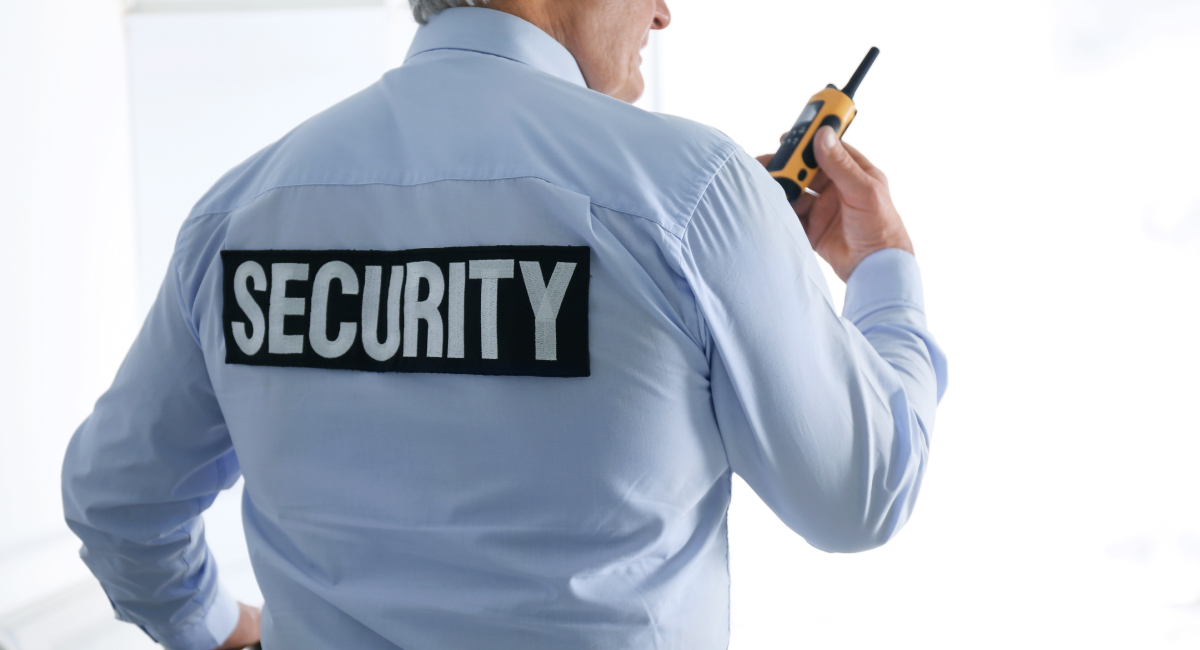
Running a business or managing a property in the Bay Area means balancing security with everything else required to keep operations running smoothly.
Retail centers, commercial buildings, residential communities, construction sites, warehouses, parking facilities, and other properties all have different security challenges. A camera system may monitor an entrance, an access control system may restrict entry, and an alarm may notify someone when an event occurs—but none of these systems can physically assess a situation, speak with a visitor, patrol a property, or respond on the ground.
That is where professional security services can make a difference.
A trained security officer provides a visible human presence, active monitoring, access control, patrols, incident response, and on-site support based on the specific requirements of the property.
For businesses and property managers considering professional protection, here are 10 reasons to hire security services in the Bay Area.
1. A Visible Security Presence Can Deter Criminal Activity
One of the most immediate benefits of professional security is visibility.
A uniformed security officer at a property entrance, conducting regular patrols, or monitoring a parking area communicates that the property is actively being watched.
That visibility can help discourage unwanted behavior such as:
- Trespassing
- Theft
- Vandalism
- Unauthorized access
- Property damage
- Loitering
- Disorderly behavior
Professional security is not about guaranteeing that an incident will never occur. Instead, it adds a proactive layer of protection that can make a property less attractive to opportunistic activity.
The presence of guards can also reassure employees, residents, customers, and visitors that security is being taken seriously.
2. Security Guards Provide a Human Response When Something Happens
Technology can detect an event.
A trained security professional can assess it.
That distinction matters.
A security camera may capture someone entering a restricted area. An alarm may indicate that a door has been opened. A monitoring system may send an alert.
But someone still needs to determine:
What happened?
Is there an actual threat?
Who is involved?
What action should be taken?
On-site security personnel can assess situations, follow established procedures, notify supervisors or emergency services when appropriate, and help maintain control while the situation is being resolved.
This human response is particularly valuable in environments where conditions can change quickly.
3. Professional Guards Can Control Access to Your Property
Not everyone who approaches a property should automatically have unrestricted access.
Security officers can help manage entrances and identify unusual or unauthorized activity.
Depending on the property and security plan, access-control responsibilities can include:
- Monitoring entrances
- Verifying credentials
- Checking visitor authorization
- Managing contractor access
- Monitoring deliveries
- Controlling restricted areas
- Maintaining visitor records
- Reporting unauthorized access attempts
For commercial buildings, construction sites, residential communities, and industrial properties, effective access control can be one of the most important layers of a security strategy.
The objective is not simply to keep people out.
It is to make sure authorized people can enter efficiently while unauthorized activity receives appropriate attention.
4. Regular Patrols Help Identify Problems Before They Escalate
A property can have cameras everywhere and still have vulnerabilities.
Physical patrols allow security personnel to inspect areas that may not be adequately covered by fixed surveillance.
Depending on the property, patrols can include:
- Building entrances
- Parking lots
- Parking structures
- Perimeters
- Loading areas
- Stairwells
- Common areas
- Storage areas
- Emergency exits
- Construction zones
- Vacant areas
During patrols, guards may identify issues such as:
- Open doors
- Broken locks
- Damaged fencing
- Suspicious activity
- Property damage
- Safety hazards
- Unauthorized individuals
- Lighting problems
- Maintenance concerns
Early identification can give property managers an opportunity to address problems before they become larger incidents.
5. Security Plans Can Be Tailored to Your Property
There is no universal security plan that works equally well for every Bay Area property.
A retail center may need a different approach from a construction site.
A corporate office may have different access requirements from an apartment community.
A warehouse may require more attention around loading docks and inventory areas.
A professional security company can begin with the property’s:
- Layout
- Operating hours
- Occupancy
- Access points
- Asset exposure
- Existing security technology
- Historical incidents
- Vulnerabilities
- Client requirements
The security deployment can then be built around those conditions.
Possible solutions may include:
On-site security guards
For properties requiring a consistent physical presence.
Mobile patrols
For larger properties or locations that need scheduled security checks.
Access control
For locations where visitor and entry management are important.
Security monitoring
For properties using CCTV, alarms, or other electronic systems.
Event security
For temporary increases in visitor volume or crowd activity.
Specialized security coverage
For construction sites, residential communities, commercial properties, and other environments with specific operational requirements.
The goal is to deploy the right level of security for the actual risk, rather than simply adding more guards.
6. Security Guards Can Complement Cameras and Other Technology
Hiring security guards does not mean abandoning technology.
In many cases, the strongest approach combines people and technology.
Think of it as:
Technology detects → Security personnel verify → Security personnel respond → Management is informed
For example:
A CCTV system detects movement near a restricted area.
A security officer receives the alert or observes the activity.
The officer investigates the situation.
If the activity is legitimate, normal operations continue.
If there is a security concern, the guard follows the property’s response procedures.
The combination of technology and trained personnel can provide broader coverage than either approach alone.
Modern security operations can also use digital tools for:
- GPS-enabled patrol verification
- Digital incident reports
- Time and attendance
- Checkpoint verification
- Real-time communication
- Activity tracking
- Client reporting
This creates a security operation that is not only visible but also measurable and documented.
7. Faster On-Site Response Can Reduce Operational Disruption
When a security issue occurs, delays can create additional problems.
A minor access issue can become a larger disruption.
An argument can escalate.
An unauthorized person can move deeper into a property.
A damaged gate can leave an entrance unsecured.
Having trained personnel already on-site or conducting nearby patrols can help the security team respond according to established procedures without first waiting for someone to travel to the property.
Security guards can help with:
- Initial assessment
- Area control
- Communication
- Access management
- Evacuation support
- Incident documentation
- Coordination with emergency responders when appropriate
Security personnel do not replace police, fire, medical, or other emergency services.
Their role is to provide appropriate on-site security support and follow the property’s emergency response plan.
8. Security Guards Can Improve the Experience for Employees, Customers, and Visitors
Security is not always about enforcement.
In many properties, security officers are also part of the day-to-day visitor experience.
A professional guard may:
- Welcome visitors
- Provide directions
- Help people locate entrances
- Assist with access procedures
- Monitor parking areas
- Answer basic property questions
- Help maintain orderly movement
- Respond calmly to concerns
This can be particularly important for:
- Office buildings
- Shopping centers
- Residential communities
- Hotels
- Events
- Business parks
The best security presence should be professional, approachable, observant, and appropriately firm.
A guard who can communicate effectively can help prevent small issues from becoming larger conflicts.
9. Professional Security Creates Better Documentation and Accountability
Security isn’t only about what happens during an incident.
It’s also about what can be documented afterward.
A professional security operation should maintain clear records of relevant activity.
Depending on the service and technology used, documentation may include:
- Daily activity reports
- Incident reports
- Patrol records
- Access records
- Visitor information
- Photos
- Time and attendance
- Security observations
- Maintenance or safety concerns
Digital security management tools can make this information easier to organize and retrieve.
For property managers, documentation can help answer questions such as:
Was the area patrolled?
When did the incident occur?
What did the guard observe?
What action was taken?
Was the issue escalated?
Has the problem occurred before?
Better documentation can also make communication between security teams, property managers, and clients more efficient.
10. A Professional Security Company Can Scale With Your Needs
Security requirements are rarely static.
A business may need additional coverage during:
- New construction
- Renovations
- Special events
- Holiday periods
- Property transitions
- After-hours operations
- Temporary vacancies
- Increased visitor activity
- Changes in operating hours
Professional security services can provide more flexibility than building and managing an entirely new internal security operation for every change.
Coverage can potentially be structured around:
- Specific hours
- Specific days
- Individual properties
- Multiple locations
- Temporary assignments
- Long-term contracts
- Mobile patrol schedules
This flexibility can be particularly useful for companies managing multiple properties across the Bay Area.
Security Services for Different Bay Area Properties
Different properties require different security priorities.
Commercial Buildings
Commercial properties may need:
- Lobby security
- Visitor management
- Access control
- Employee safety support
- Parking patrols
- After-hours monitoring
- Incident reporting
The goal is to protect employees and visitors while maintaining a professional business environment.
Construction Sites
Construction sites can have valuable equipment, materials, tools, and partially completed structures.
Security may focus on:
- Perimeter monitoring
- Gate control
- Equipment protection
- Material storage
- Overnight patrols
- Trespassing prevention
- Incident documentation
Because construction sites change throughout the project, the security plan should evolve with the site.
Residential Communities and HOAs
Residential security may focus on:
- Gate and entrance monitoring
- Visitor management
- Parking areas
- Community patrols
- Access control
- Property damage
- Suspicious activity
- Resident concerns
Security personnel can provide both a deterrent and a point of contact for residents and property management.
Retail and Shopping Centers
Retail properties can face a combination of security and customer-service challenges.
Security personnel may help with:
- Parking lot patrols
- Access control
- Suspicious activity
- Theft-related concerns
- Crowd management
- After-hours security
- Customer assistance
The visible presence of professional security can also contribute to a more controlled environment for shoppers and employees.
Warehouses and Industrial Properties
Security requirements may include:
- Perimeter patrols
- Loading dock monitoring
- Employee access
- Visitor management
- Inventory-area protection
- Vehicle monitoring
- After-hours coverage
Large industrial properties can benefit from scheduled patrols and clear procedures for responding to unauthorized access.
On-Site Security vs. Security Technology: Which Is Better?
This is not always an either-or decision.
Security cameras
Strengths:
- Continuous visual coverage
- Recording capabilities
- Remote viewing
- Useful evidence
Limitations:
- Cannot physically intervene
- Blind spots can exist
- Require monitoring and maintenance
Alarms
Strengths:
- Rapid notification
- Useful for specific intrusion events
- Can integrate with monitoring systems
Limitations:
- Require someone to respond
- Can generate false alarms
- Do not replace physical presence
Security guards
Strengths:
- Physical presence
- Human judgment
- Patrol capability
- Access control
- Customer interaction
- Incident response
- Ability to adapt to changing conditions
Limitations:
- Require proper scheduling and supervision
- Quality depends on training and management
- Coverage needs to be matched to the property’s requirements
The strongest approach
For many properties, the answer is a layered security strategy that combines people, technology, procedures, and physical security measures.
How to Choose a Security Company in the Bay Area
Hiring a security company is an important decision.
Don’t evaluate providers solely on hourly rates.
Consider the entire service.
1. Experience
Does the provider understand your property type and security requirements?
2. Guard training
Ask about training, supervision, qualifications, and ongoing development.
3. Security planning
Will the company conduct a site assessment and build a plan around your risks?
4. Communication
How will guards communicate with supervisors and property management?
5. Reporting
Will you receive clear, timely documentation of incidents and activities?
6. Technology
Does the company use appropriate technology to improve visibility and accountability?
7. Supervision
How frequently are guards supervised and supported?
8. Flexibility
Can coverage change as your security requirements change?
9. Local service capability
Can the company reliably support your property and respond to operational requirements in the Bay Area?
10. Client transparency
Can you easily understand what security services are being delivered?
A good provider should be able to explain why a particular security solution is recommended—not simply tell you how many guards they can provide.
Questions to Ask Before Hiring Security Services
Before signing a contract, ask:
What security risks do you see at my property?
A provider should be willing to understand your site before recommending coverage.
What type of guard do I need?
The right officer profile depends on the environment and responsibilities.
Do you provide mobile patrols?
This can be useful for properties that don’t require a full-time on-site guard.
How are guards supervised?
Understand how the company monitors service quality and supports personnel.
How are incidents reported?
Ask whether reports are paper-based, digital, real-time, or delivered through a client portal.
Can you integrate with existing security technology?
This may include CCTV, access control, alarms, or other systems.
How quickly can coverage be adjusted?
Your security requirements may change over time.
How will you measure performance?
Look for meaningful service metrics rather than vague promises.
Why Plaza Protection Is a Security Partner for Bay Area Businesses
Plaza Protection takes a tailored approach to security.
Instead of treating every property the same, security planning can be built around the property’s environment, risks, operating hours, and specific requirements.
Plaza Protection services can include:
- Unarmed security guards
- Fire watch
- Mobile patrol
- Foot patrol
- Remote monitoring
- CCTV installation
- Access control
- Property security
- Construction site security
- Commercial security
The objective is to combine trained personnel, effective procedures, and appropriate technology to create a security program that fits the property.
For property managers and business owners, visibility is also important.
Modern security operations should make it easier to understand what is happening at a property—not simply assume that everything is going according to plan.
Through structured reporting, patrol documentation, and communication, security teams can provide greater accountability and transparency.
The Real Value of Professional Security Services
The value of security services isn’t limited to preventing one specific incident.
It’s about creating a more controlled environment every day.
A professional security presence can help businesses:
Deter unwanted activity
↓
Monitor people and property
↓
Identify issues earlier
↓
Respond according to established procedures
↓
Document what happened
↓
Give management better visibility
That creates a security operation that is proactive rather than purely reactive.
Frequently Asked Questions
Why should I hire security services for my business?
Professional security services can provide a visible deterrent, access control, patrols, incident response, security monitoring, documentation, and support tailored to your property’s risks.
How much do security guard services cost in the Bay Area?
There is no single price for security services. Cost depends on factors such as the type of guard, number of guards, coverage hours, property size, location, responsibilities, risk level, and required technology. A reputable provider should assess your needs before providing a proposal.
Are security guards better than security cameras?
Security guards and cameras serve different purposes. Cameras provide surveillance and recording, while guards provide physical presence, human judgment, patrols, access control, and on-site response. Many properties benefit from combining both.
Do small businesses need security guards?
Not every small business needs full-time on-site security. Depending on the risk, mobile patrols, scheduled checks, remote monitoring, or part-time coverage may provide a more appropriate solution.
Can security guards help with access control?
Yes. Security personnel can monitor entrances, verify visitors and credentials, manage access procedures, and report unauthorized entry attempts based on the property’s security plan.
Can security guards provide customer service?
Yes. Depending on the assignment, guards can provide directions, assist visitors, help manage access, and serve as a professional point of contact while maintaining their security responsibilities.
What industries use professional security services?
Commercial buildings, retail properties, residential communities, construction sites, warehouses, industrial facilities, events, campuses, and other properties can use professional security depending on their risks and operational requirements.
Can Plaza Protection provide security throughout the Bay Area?
Plaza Protection provides security services for businesses and properties in the Bay Area. Coverage and service availability depend on the specific location and requirements.
Final Thoughts
Hiring professional security services is not simply about putting a guard at a property entrance.
The right security program should be designed around the people, property, operations, vulnerabilities, and risks that need to be protected.
For Bay Area businesses and property managers, professional security can provide:
- A visible deterrent
- Access control
- Regular patrols
- Human oversight
- Faster on-site response
- Incident documentation
- Technology support
- Better accountability
- Flexible coverage
- Greater peace of mind
The most effective security strategy is rarely based on one solution.
It combines trained people, appropriate technology, clear procedures, ongoing supervision, and continuous risk assessment.
If you’re evaluating security options for a commercial property, residential community, construction site, retail center, or other Bay Area location, start with the risks—not the number of guards.
Identify what needs protection. Understand where the vulnerabilities are. Then build the security solution around those needs.
That’s how professional security becomes more than a service—it becomes part of a property’s overall risk-management strategy.

I am from the bay area and understand the risks factor for a property. This article explains accurately why a security software is important aspect of evaluating the efficiency of a security service provider.